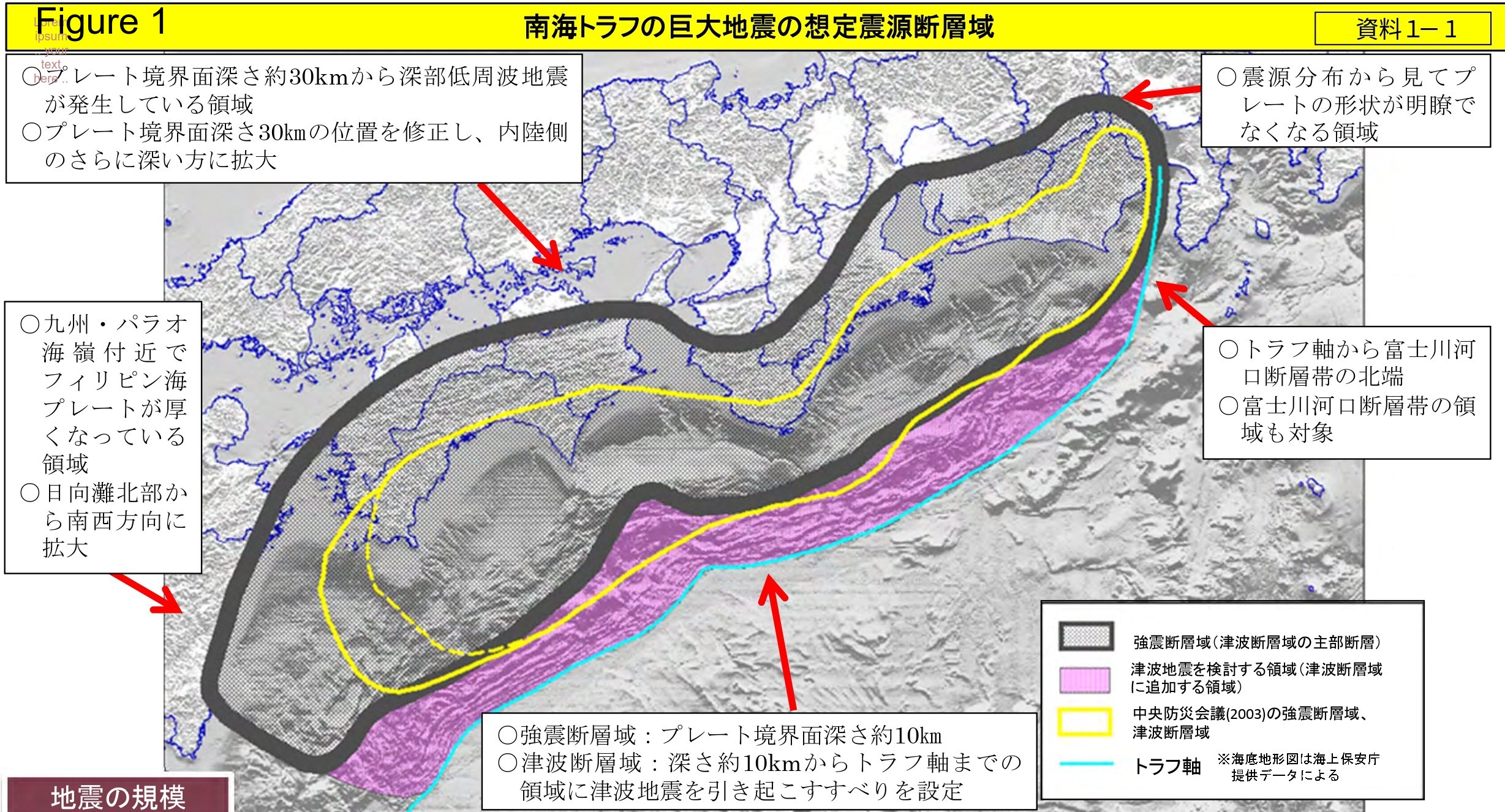
When an earthquake occurs, the area where the fault plane breaks and shifts is called the seismic source zone. Especially, near the plate boundaries the area which moves at high speed during an earthquake, generating seismic waves, is called the strong earthquake fault zone. In the Nankai Trough Earthquake the strong earthquake fault zone is shown by the circle of grey bold line in Figure 1. (Cabinet office [3]) It includes the large area of the south side of the Median Tectonic Line which is one of the biggest fault lines in the world. In the Tohoku earthquake in 2011, the seismic source was 160 km away from the coast, but in the Nankai Trough Earthquake it might be directly underneath the cities in the zone.
According to the damage estimation (NHK [1]) 215,000 people are going to be killed by the tsunami and 73,000 people are going to be killed by the collapse of the buildings. The total number of the victims is 298,000.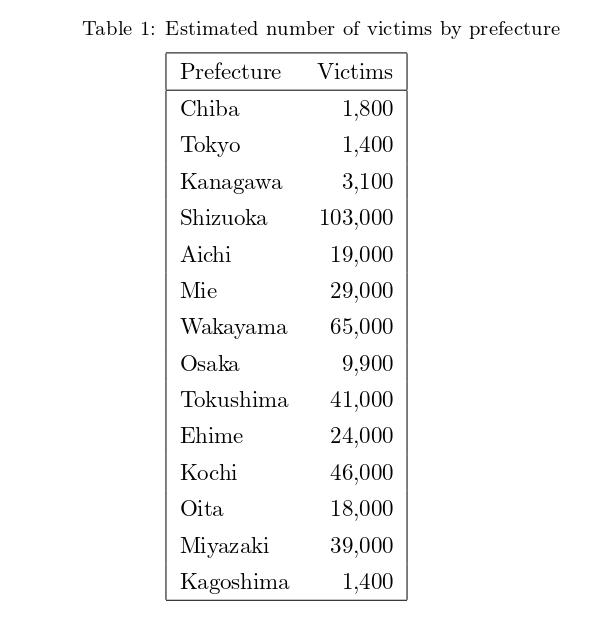
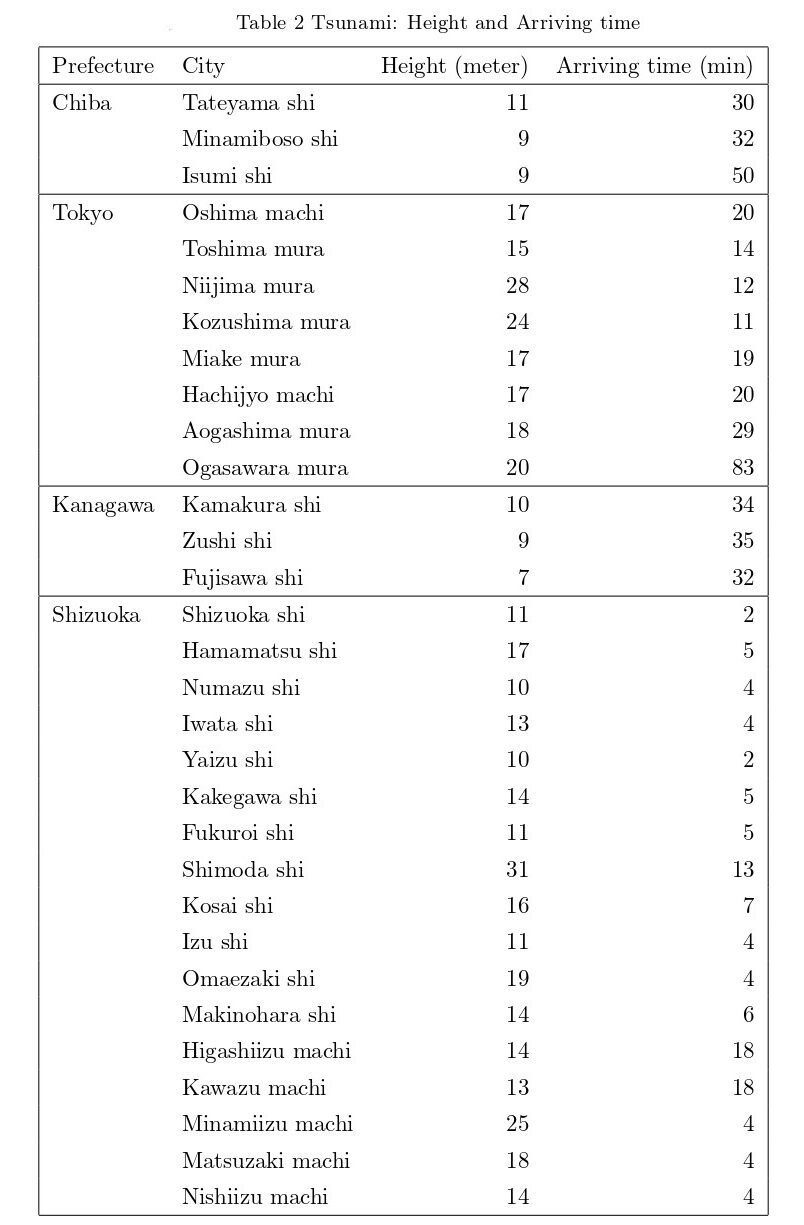
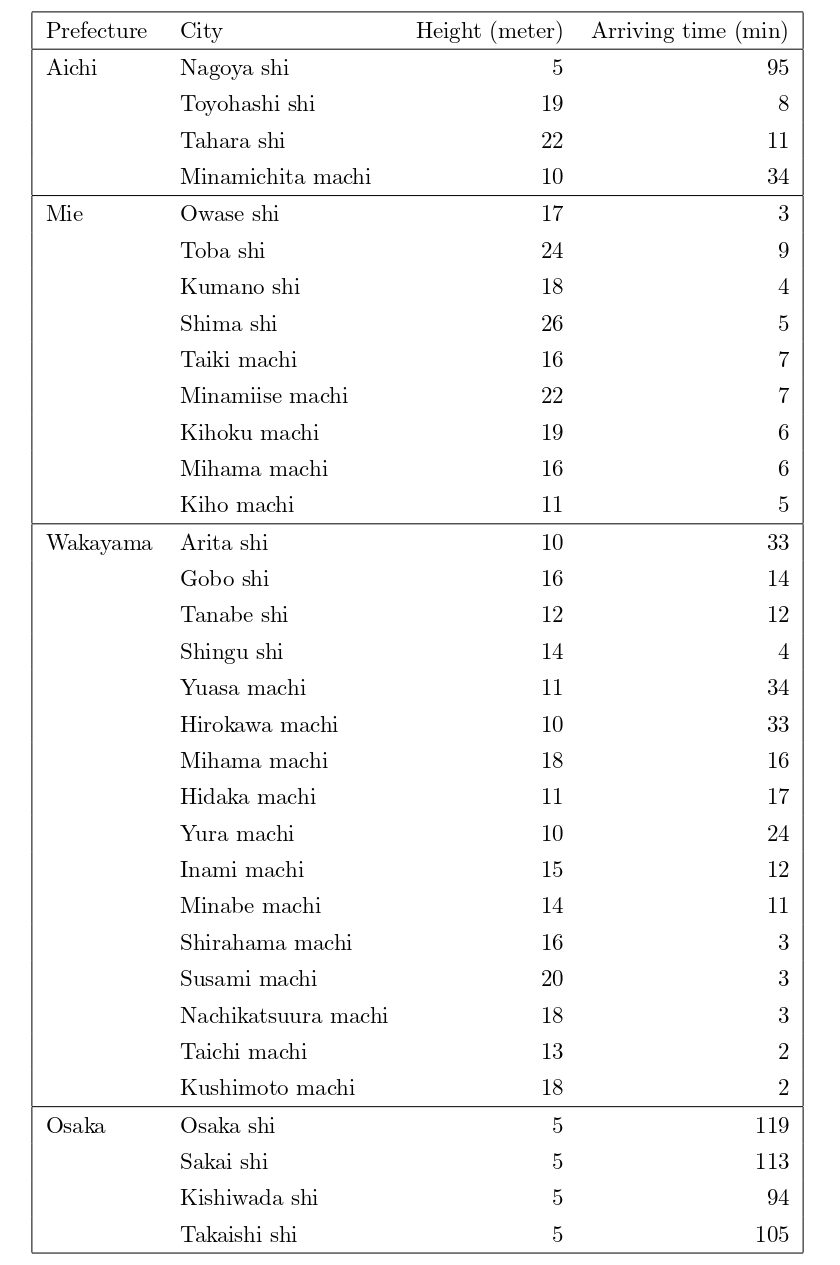
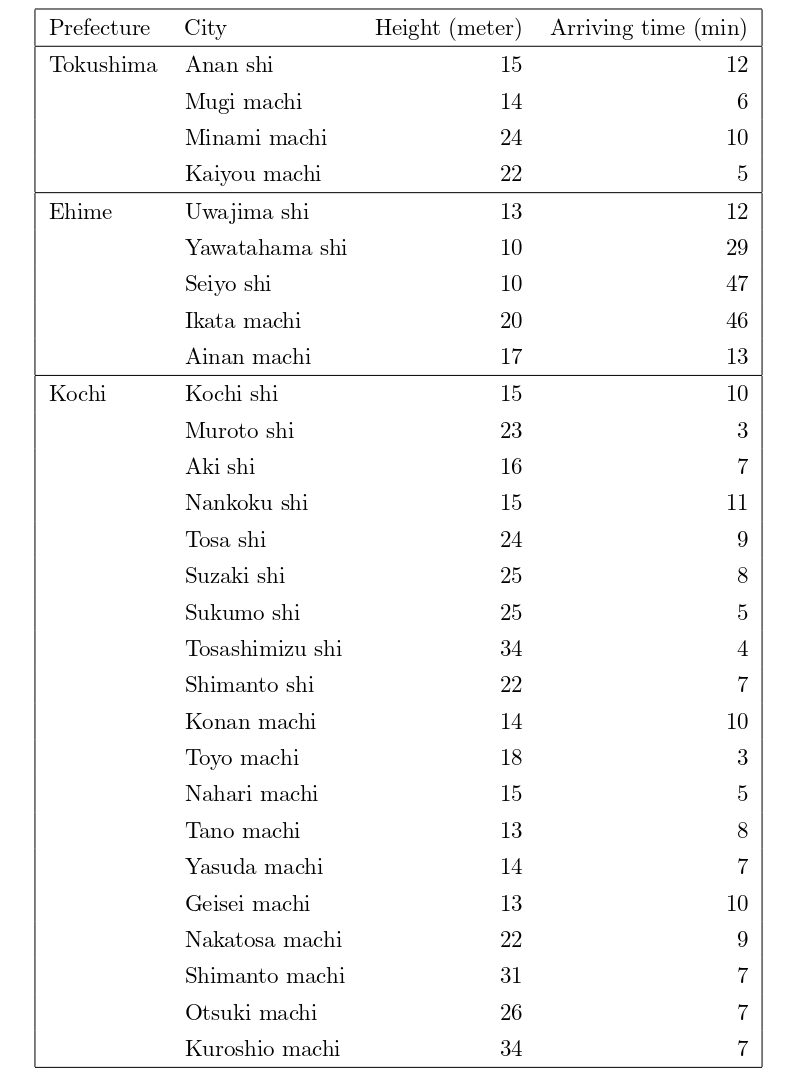
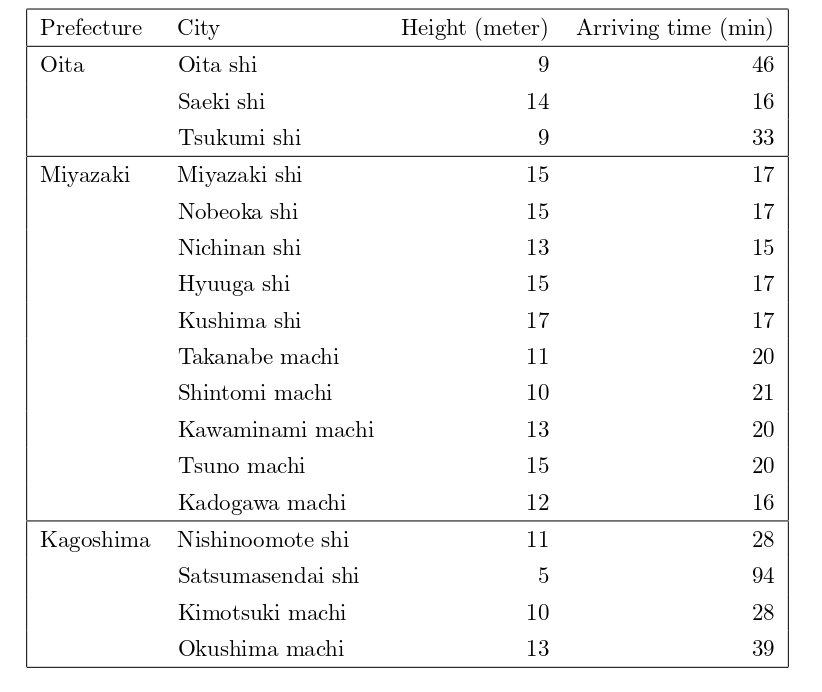
The best way to survive the massive earthquake is to run away from it. Table 2 is an excerpt from the damage estimation (NHK [1]) about the height of the tsunami and the arriving time. If the large tsunami arrives in less than 5 minutes, it is almost impossible to evacuate from it after the earthquake has occurred. We need to complete the evacuation before the earthquake.
July Rehearsal (Safety of Cities and People):
People who live in the lower places than the expected tsunami or live in the old buildings with less earthquake-resistance within the strong earthquake fault zone in Figure 1 should spend July in safer places and safer buildings.
The initiatives by the companies are very important for the success of this project. For instance, if the buildings of companies and/or the houses of the workers are located on a lower place than the estimated height of the tsunami, first the evacuation plan should be considered carefully. Then it should be carried out smoothly to protect the lives of workers and their families and minimise the damage to the assets of the companies.
The support by the public organisations is also helpful such as the usage of the shelters. The movement of hospitals would be most difficult. However, it is worth doing the rehearsal since in the event of the earthquake the patients in hospitals are most vulnerable and need support to take refuge to safer places.
In the Tohoku earthquake on 11 Mar 2011, 22,000 people were suddenly caught by the tsunami and taken to the cold ocean. We still freshly remember the fear. In the pandemic of Covid in 2020 we experienced a long period of isolation. With the proper support by the companies and the public organisations it would not be so difficult to conduct a short-distance move for one month.
If the earthquake occurs in July, we can minimise the damage caused by the earthquake.
If it does not occur in July, we can return to normal life if we can quickly evacuate from the tsunami. However, in the case of the evacuation from the old buildings we should continue it until the earthquake occurs.